
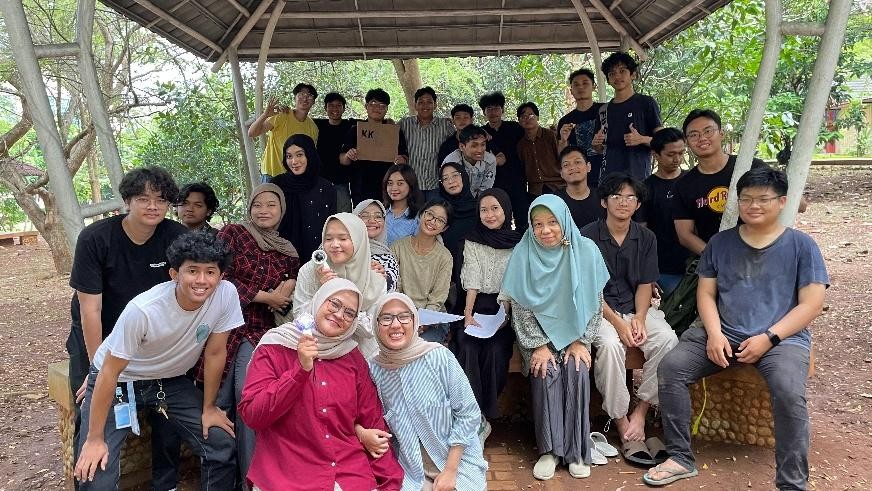
Semarang, 8 August 2025 — Students from Diponegoro University participating in the Faculty of Engineering’s World Class University Sustainable Development Goals programme (WCU SDGs FT) presented the results of an innovation programme entitled TERRA: “Environmentally Friendly Technology”. This programme was realised through a Thematic Community Service Programme (KKN-TM) by the KKN-TM 166 team.
The TERRA programme aims to support the achievement of the Sustainable Development Goals (SDGs) within the Faculty of Engineering by providing sustainable organic waste processing facilities. The programme’s main focus covers two SDG points: addressing climate change and preserving terrestrial ecosystems.
The programme was carried out by a team of WCU SDGs FT students comprising El Roy Joel Tyron Nugroho, Juwandi, Mochamad Faray Abrar, Nahla Nur Sabrina Safira, Lina Septiani, and Rafael Girvan, under the guidance of four Field Supervisors (DPL), namely Dr. Ling Ir. Sri Sumiyati, S.T., M.Si., IPM., ASEAN Eng., Dr. Ir. Anik Sarminingsih, M.T., IPM., ASEAN Eng., Adnan Fauzi, S.T., M.Kom., and Dr. Eng. Bimastyaji Surya Ramadan, S.T., M.T. These four lecturers played a vital role in providing guidance and support throughout the programme. Furthermore, the programme’s implementation received support from Dr.-Ing. Santy Paulla Dewi, S.T., M.T., as the WCU coordinator for the Faculty of Engineering at the University of Diponegoro.
The lack of waste processing facilities on the campus of the Faculty of Engineering at Diponegoro University is a problem that requires serious attention. This situation has led to the accumulation of leaf litter in various corners of the faculty grounds, while food waste is often disposed of together with both organic and inorganic waste in the same bins. The mixing of these waste types not only reduces the efficiency of the management process but also has the potential to cause unpleasant odors and pollute the surrounding environment. This situation highlights the need for innovation and the provision of more integrated and environmentally friendly waste management facilities to support the creation of a clean, healthy, and sustainable campus environment.
As an effort to support sustainable development, the WCU SDGs program of the Faculty of Engineering at Diponegoro University, through the TERRA initiative: “Environmentally Friendly Technology,” has implemented the creation of the Teba composter. This technology is a traditional organic waste processing system originating from Bali, taking the form of a composting bin made of concrete, bricks, or similar materials.
The Teba waste management system utilizes the natural biological decomposition process carried out by microorganisms to efficiently and environmentally friendly convert organic waste—such as food scraps and leaves—into compost. In addition to serving as a waste management tool, the Teba composter also has educational value. This tool serves as a learning tool for the academic community to understand the organic recycling cycle and the importance of sustainable waste management in maintaining cleanliness and environmental balance.
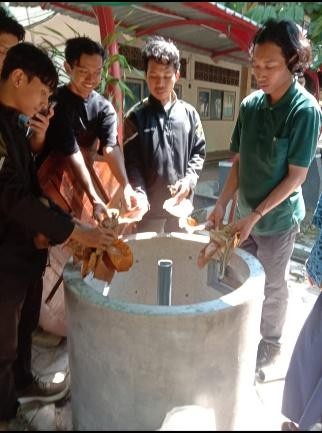
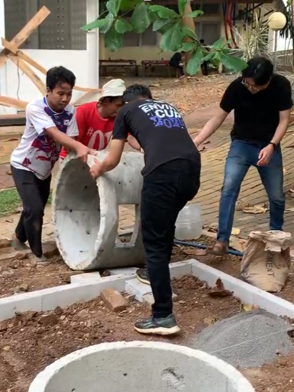
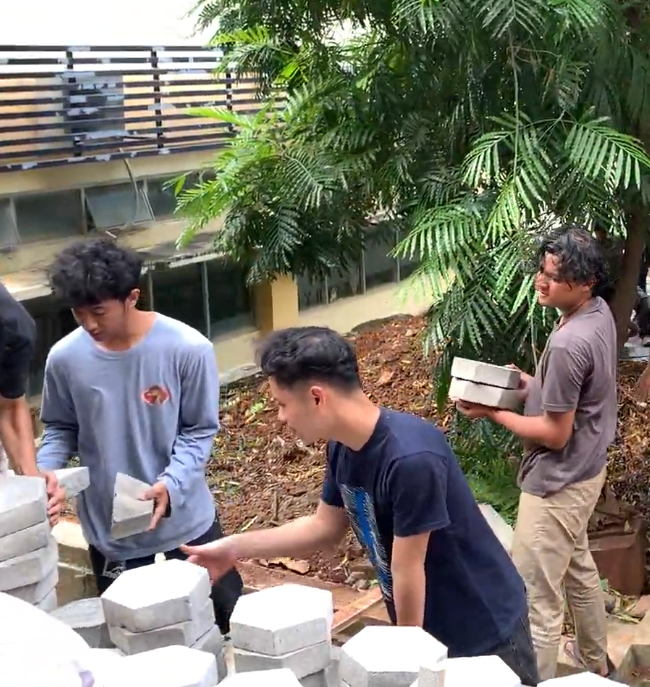
A planning meeting for the WCU SDGs program at the Faculty of Engineering, Diponegoro University, was held on Sunday, June 15, 2025, with discussions focused on the technical aspects of implementing the TERRA initiative: “Environmentally Friendly Technology.” During the meeting, the implementation team developed strategies for the design and construction of an organic waste processing facility in the form of a Teba compost bin. The Teba construction process lasted 16 days, from July 15, 2025, to July 31, 2025, and took place on a plot of land located south of the Diponegoro University Department of Environmental Engineering building. The Teba composter consists of two concrete pipes arranged vertically to form the main container. Inside, an umbrella is installed in the center of the pipes to protect the compost from rainwater, while the top is equipped with a wooden table that serves as both a cover and a protective structure for the composter.
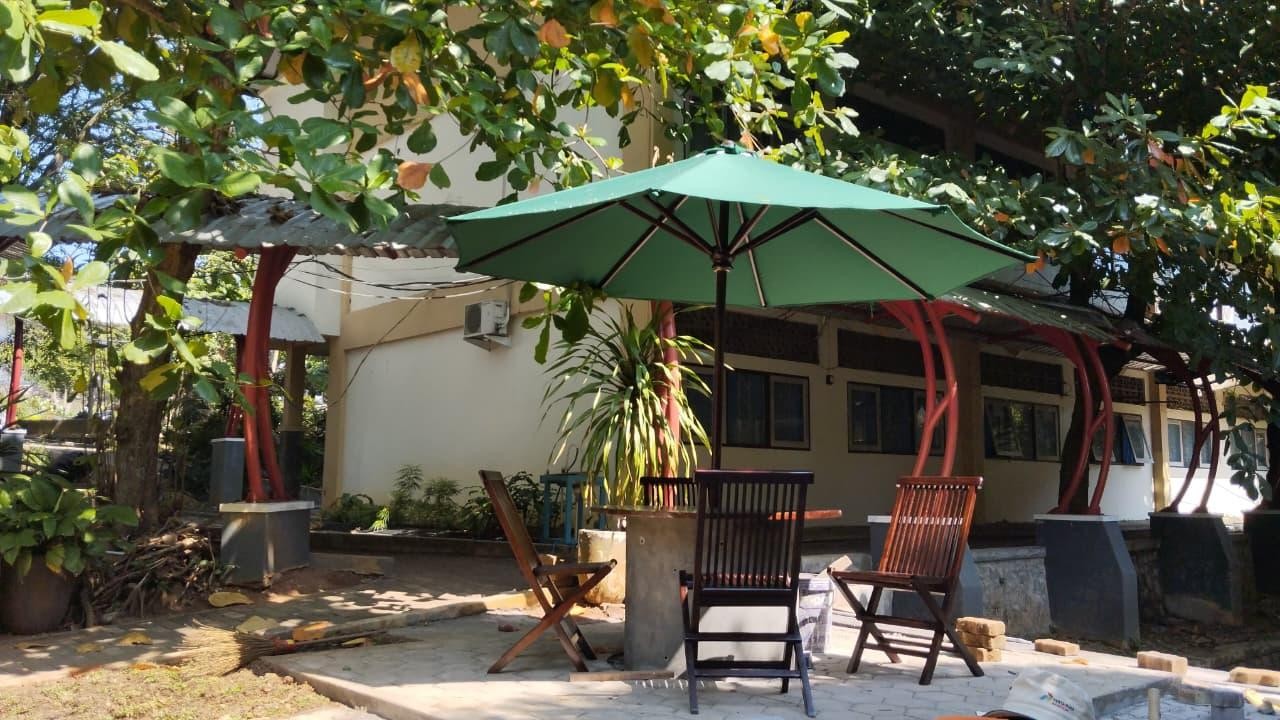
To this day, Teba remains an active organic waste processing facility within the Faculty of Engineering at Diponegoro University. Teba not only provides a solution to organic waste management issues but also adds value to the campus environment. Around the main structure of the compost bin, several chairs have been installed, allowing the area to be utilized as a co-working space for the academic community. Thus, Teba serves not only as a sustainable waste processing facility but also as an interactive space that supports academic activities, collaboration, and discussions among students and faculty in a productive and eco-friendly atmosphere.
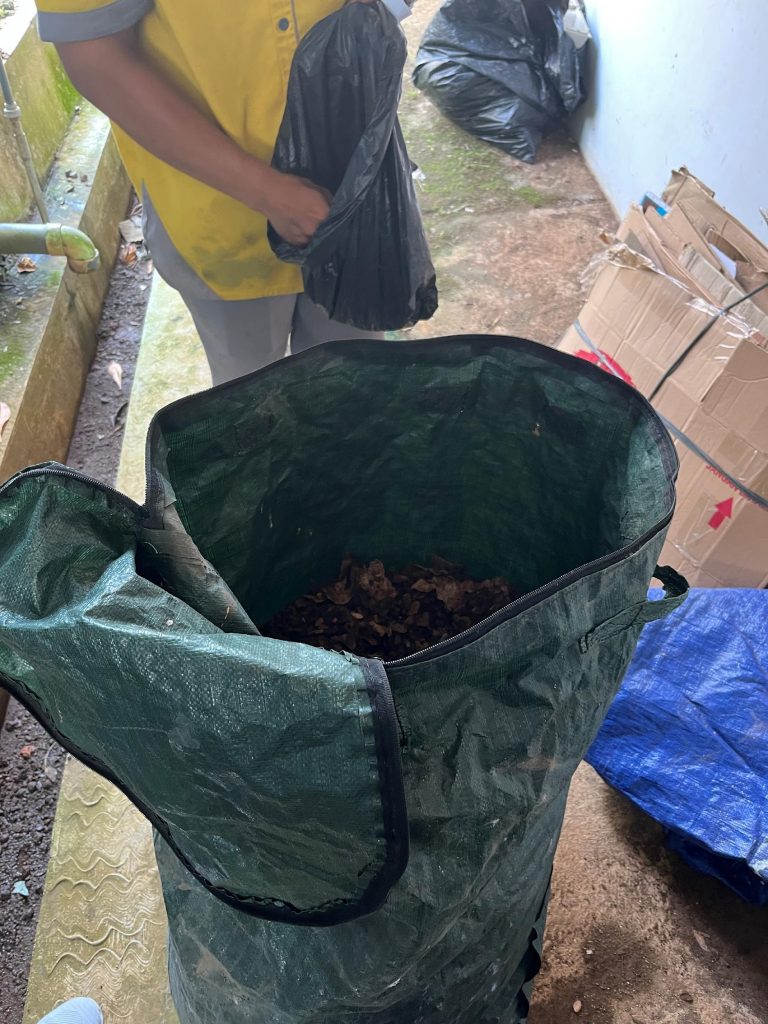
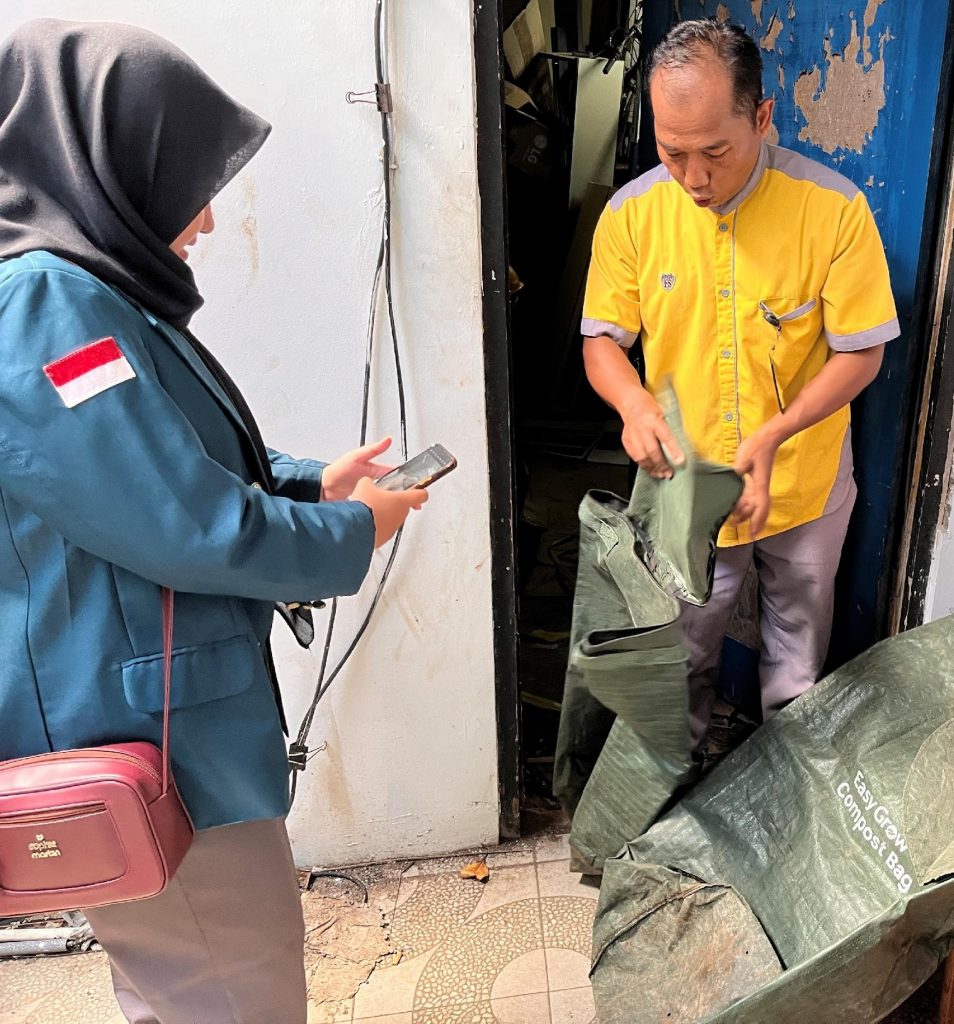
In addition to the construction of the Teba compost bin, the TERRA initiative: “Environmentally Friendly Technology” also includes monitoring of compost bag facilities located across 12 departments within the Faculty of Engineering at Diponegoro University. This activity took place over four days, from 2 June to 5 June 2025, with the aim of assessing the condition and effectiveness of the compost bags in each department. Through these activities, the implementation team sought to ensure that the organic waste processing facilities were being utilised optimally and in accordance with established procedures. All monitoring results were subsequently compiled into an official report and submitted to the WCU SDG’s FT as material for evaluation and as a basis for follow-up actions to improve the effectiveness of the sustainable waste management programme within the Faculty of Engineering at Diponegoro University.
Through the implementation of the Faculty of Engineering’s World Class University Sustainable Development Goals (WCU SDGs FT) programme, Diponegoro University has high hopes for the realisation of a green, innovative and sustainable campus environment. This programme is expected not only to serve as a means of applying environmentally friendly science and technology, but also to foster ecological awareness among the academic community. By integrating sustainability principles into academic activities and community service, WCU SDG’s FT is committed to making the Faculty of Engineering a pioneer in the development of sustainable technology that supports the achievement of sustainable development goals at both national and global levels.